


DOOH screens as a medium that cannot be turned off or skipped – advantages over online formats
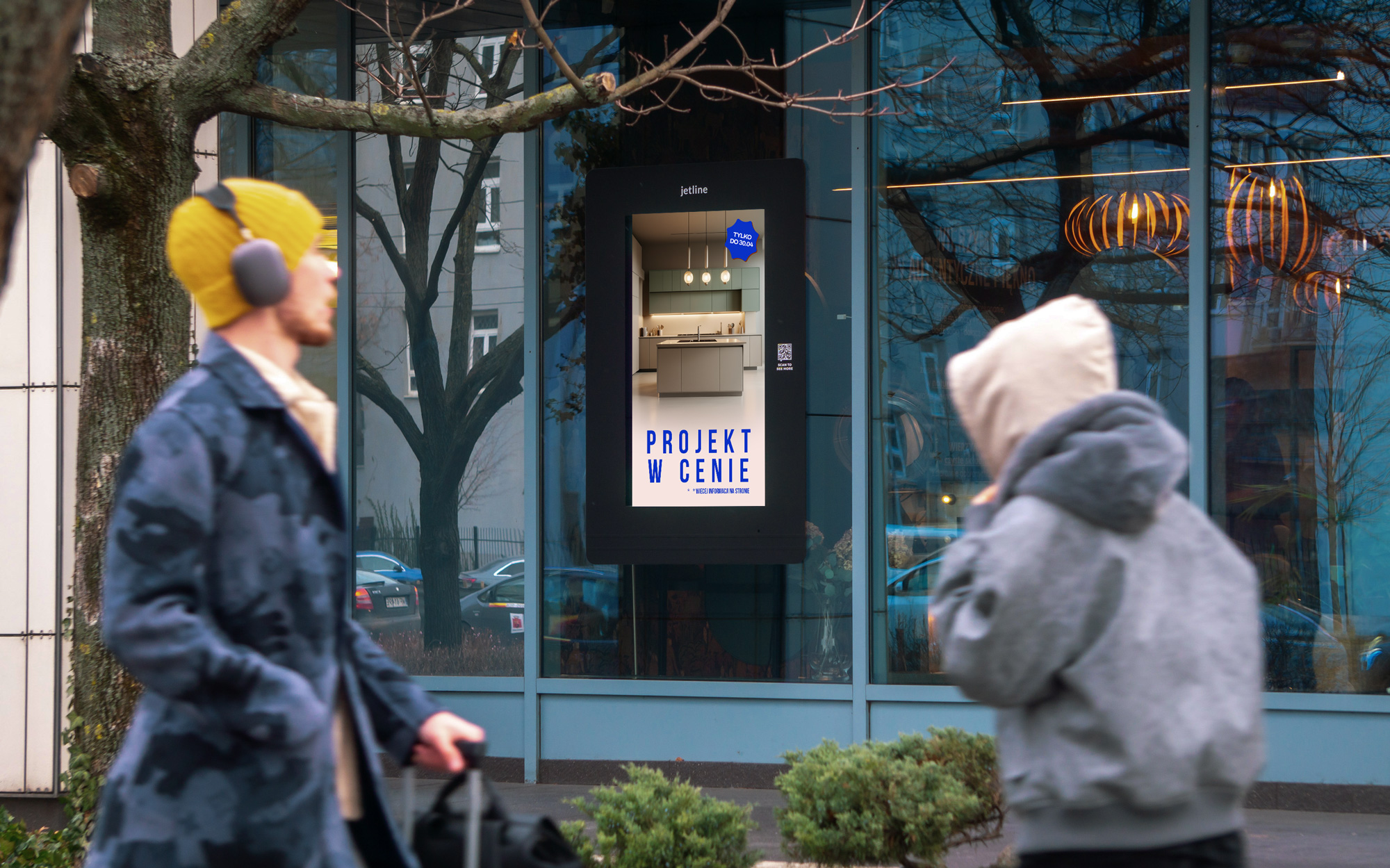
Today, the advertising market is undergoing a fundamental transformation. Consumer attention has become a scarce resource, and traditional online formats increasingly encounter barriers such as ad blockers, content scrolling, or declining audience engagement. In this reality, DOOH (digital out of home) is gaining importance as a form of outdoor advertising that functions as a complement to mobile app environments and social media, offering brands real contact with audiences.
DOOH in public spaces – a presence that cannot be ignored
DOOH screens are permanently embedded in the landscape of public spaces and urban environments. We encounter them in shop windows, restaurants and service establishments, building facades, along main communication arteries, in railway stations, shopping centers, and retail galleries. This is digital media that do not require an active user decision – advertisements are visible in the natural environment of audiences, at moments when they spend time outside the home, on their way to work, school, shopping, or meetings.
Unlike forms such as static billboards, DOOH screens allow for dynamic content management and response to changing environmental conditions. This way, outdoor advertising stops being a carrier of unchanging messages and becomes a flexible communication tool.
No ability to turn off or skip advertisements
One of the key advantages offered by DOOH advertising is the fact that it cannot be turned off or skipped. The advertisement does not compete directly with other content on a smartphone screen, is not skipped with one finger swipe, and does not disappear after a few seconds. DOOH screens remain visible, attracting audience attention through visually appealing creatives and animations.
It is precisely this feature that makes DOOH an effective advertising medium in campaigns focused on broad reach and brand awareness building.
Precise targeting and real-time broadcasting
Modern digital outdoor advertising offers capabilities that just a few years ago were reserved exclusively for the online space. DOOH allows for precise ad targeting to specific audience groups, taking into account location, time of day, demographic data, or location context.
Real-time content broadcasting means that DOOH campaigns can respond to various factors such as weather conditions, traffic intensity, or sports results. In practice, this means better targeting and greater contextual message relevance, which directly impacts campaign effectiveness and audience purchasing decisions.
Measurability and data analysis
Contemporary DOOH campaigns are based on data analysis and measurable ways to reach them. Displaying ads, campaign duration, and key performance indicators allow for assessing the real impact of actions on the entire marketing campaign. Integrating DOOH with online activities enables consistent planning and optimization of campaigns across multiple channels simultaneously.
DOOH also allows for the use of mechanisms known from programmatic advertising, as well as solutions based on artificial intelligence, which support broadcast planning and better message matching to audiences.
DOOH as a complement to online activities
It's worth emphasizing that out of home DOOH does not compete with digital media, but complements it. Campaigns conducted using screens located in urban spaces often amplify the effects of activities carried out on social media or the brand's website. Contact with advertising in the physical world increases message memorability and positively influences subsequent online interactions.
Thanks to the ability to remotely manage content, digital DOOH media allow for updating creatives, adjusting ad display times, and responding to changes during campaign execution.
Modern medium for various industries
DOOH finds application in campaigns for various industries – from retail and services, through culture and entertainment, to the financial sector. Modern screens, including touch screens and interactive functions, increase audience engagement and allow for more direct contact with the brand.
All of this makes DOOH render outdoor advertising a flexible, scalable medium adapted to contemporary market expectations.
DOOH wins the race for consumer attention
In a world of content overload and growing competition for consumer attention, DOOH screens offer unique opportunities. The lack of ad turn-off options, precise targeting, real-time broadcasting, and DOOH integration with other communication channels make it an effective, measurable medium resistant to phenomena characteristic of online. For brands seeking modern solutions in outdoor advertising, DOOH is today a highly effective tool in the fight for consumer attention and a guarantee of brand presence in public spaces.