


Forbidden for businesses, allowed for the city. Will the CJEU challenge double standards in landscape ordinances?

On June 2, 2026, the Supreme Administrative Court took a step that could prove groundbreaking for the entire outdoor advertising market. For the first time, it referred preliminary questions to the Court of Justice of the European Union concerning the compatibility of certain solutions used in landscape ordinances with the EU Services Directive.
This is an important moment not only for Krakow but also for most cities that have adopted or are preparing their own landscape ordinances. This time, the issue of equal conditions for conducting business activity has come to the forefront.
For years, entrepreneurs were told that certain advertising formats had to disappear because they negatively affected the city's landscape. At the same time, similar solutions remained permissible on infrastructure belonging to the city or entities associated with it.
The Supreme Administrative Court therefore posed a fundamental question: does advertising affect the landscape differently simply because it is on a medium owned by the city?
In the case concerning Krakow, the court pointed out, among other things, exceptions related to the Municipal Information System, bus shelters, and the Tauron Arena hall, which hosts one of the largest digital screens in Europe.
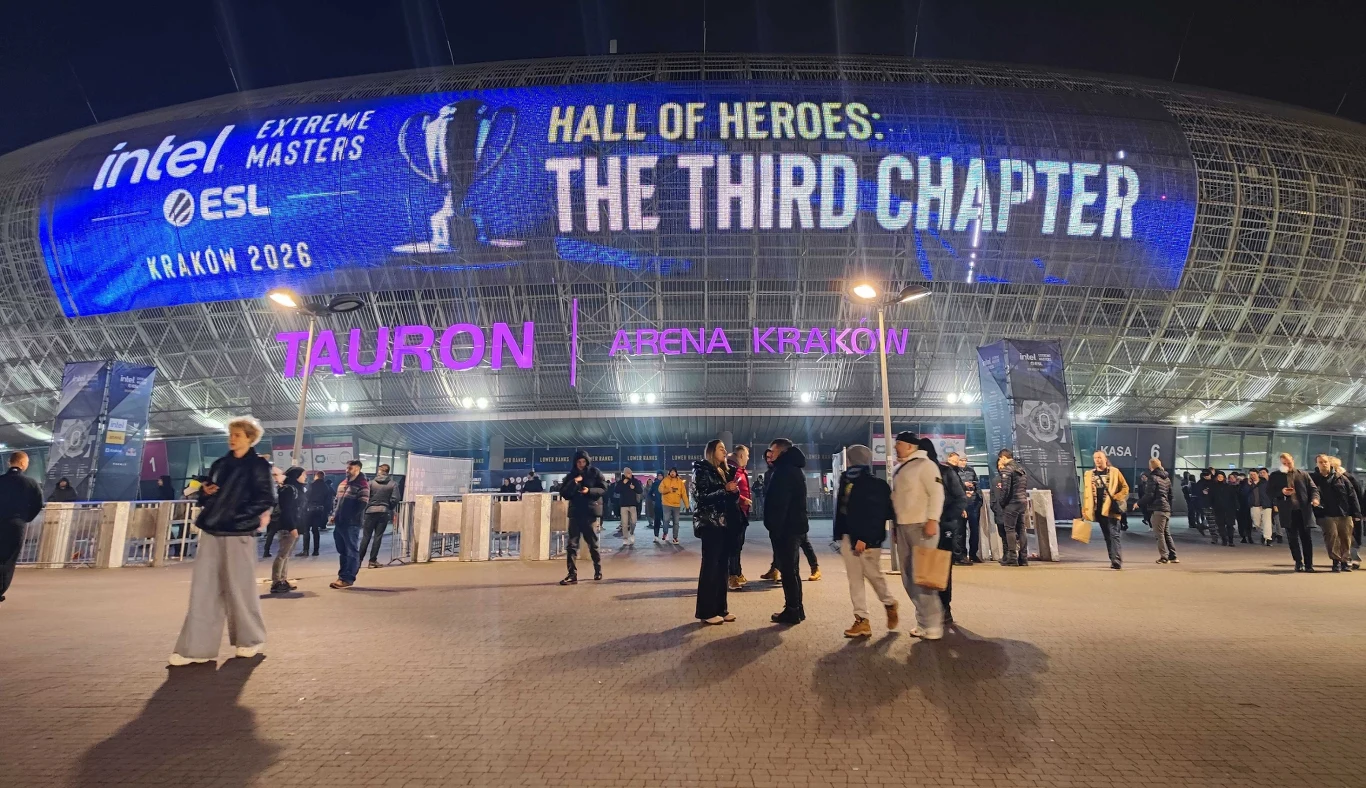
IEM Krakow 2026 / source: Zbigniew Pławecki
If a digital screen or large-format advertisement truly violates spatial order, it is difficult to assume that its impact depends on the owner of the medium. If, however, such solutions are acceptable in urban space, the question arises as to why similar activities by private entrepreneurs are prohibited.
It was this doubt that the Supreme Administrative Court recognized.
What is particularly important, the court also asked whether, when assessing the compliance of such regulations with EU law, the fact that the entity establishing the prohibitions is simultaneously the owner of the infrastructure covered by exceptions or benefits from activities conducted on this infrastructure is relevant.
This question may have consequences far beyond Krakow.
Similar exceptions regarding municipal infrastructure also exist in many other landscape ordinances, including those in Poznań and Gdańsk. If the CJEU shares the Supreme Administrative Court's doubts, solutions functioning in numerous local governments may be called into question.
The matter also gains particular significance in the context of the landscape ordinance being prepared for Warsaw. The CJEU's answer will be carefully analyzed not only by local governments but also by entrepreneurs, investors, and authors of new draft ordinances.
We will have to wait for the ruling. The average waiting time for a CJEU response is currently 17 to 24 months. However, the Tribunal will not evaluate Krakow's ordinance itself, but will indicate how EU law should be interpreted. Only on this basis will the Supreme Administrative Court issue a final decision.
One thing, however, can be said today. For the first time, the subject of such serious doubts is not merely the restriction of advertising in public space, but the question of whether the state and local government can demand standards from entrepreneurs that they do not apply to themselves.
https://orzeczenia.nsa.gov.pl/doc/3C37896CC2