


OOH reaches for digital budgets. Sarah Parkes on the opportunity opened by programmatic
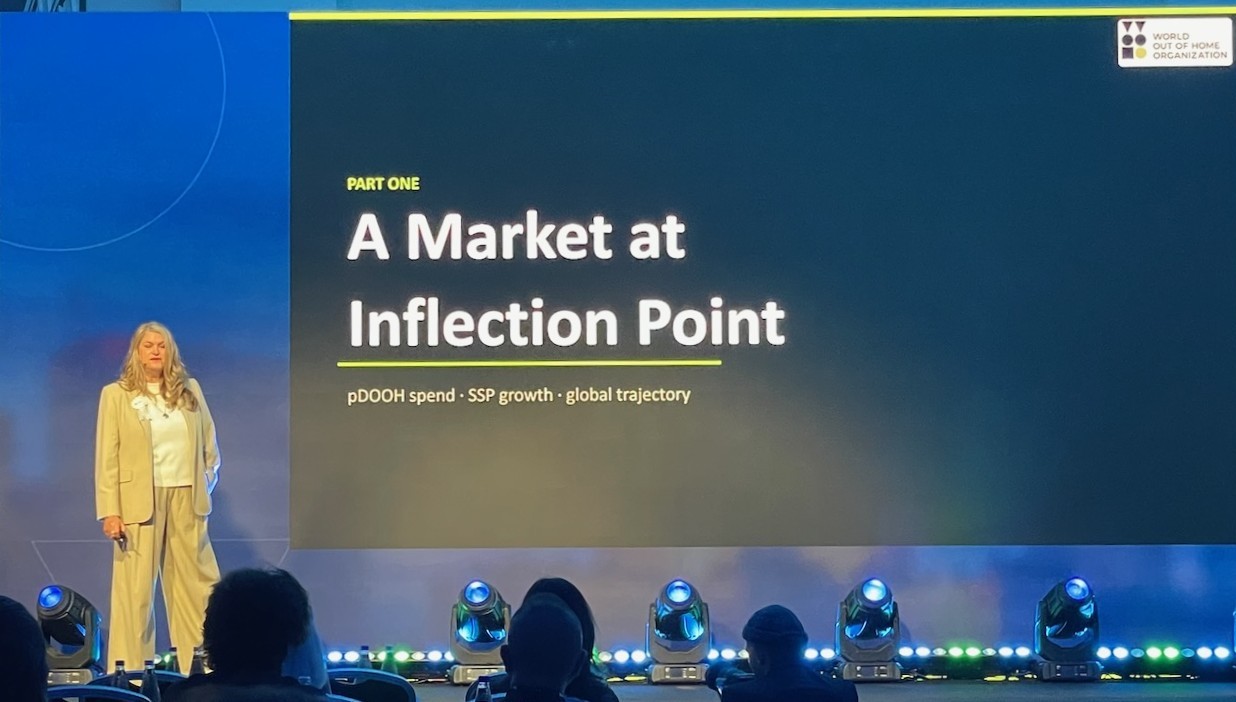
Out-of-home advertising has spent years seeking a greater share of advertisers' spending. During the WOO Central European Regional Forum in Warsaw, Sarah Parkes showed where it might find its next source of growth: in digital budgets, access to which is opened up by programmatic DOOH.
The presentation by the Managing Partner of Talon Network & Grand Visual, delivered as part of the "Scaling DOOH Through Global Omnichannel Demand" session on October 23, 2026, was a story about a shift in how out-of-home advertising is bought. Screens in public spaces can become part of the same plan through which an advertiser already manages other digital channels. For OOH, this means the chance to tap into money the industry hasn't always had the opportunity to compete for.
A large market, still a small share
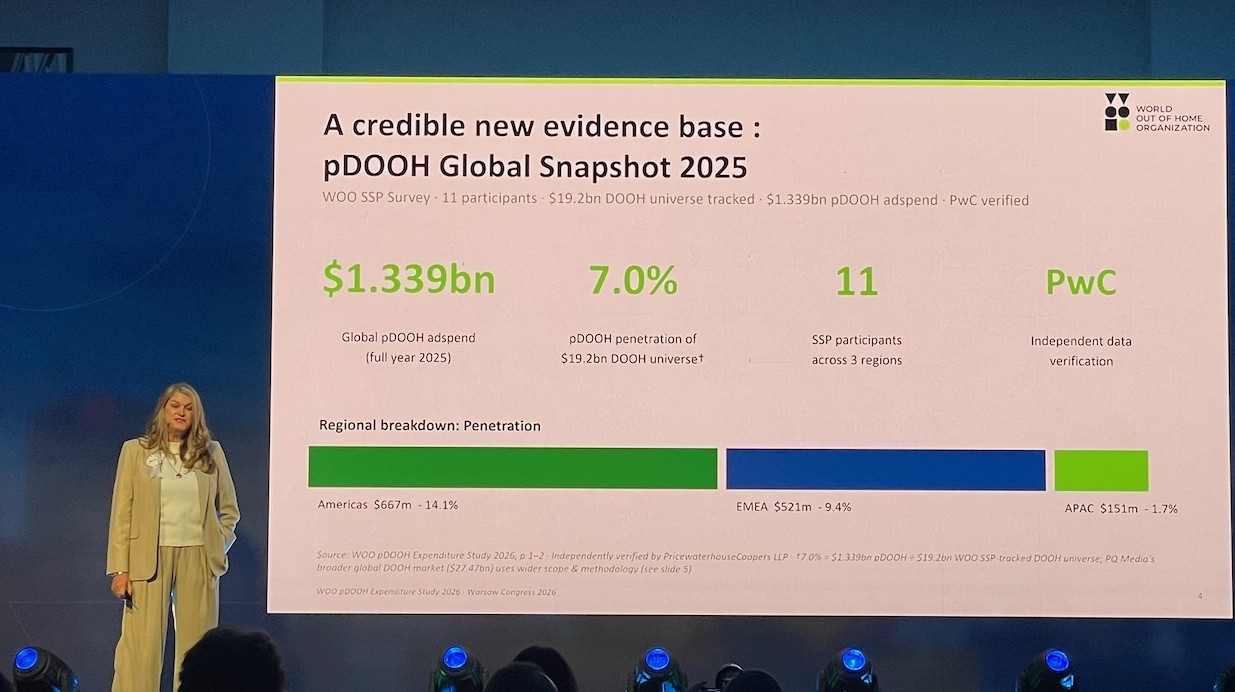
Parkes based her presentation on the WOO pDOOH Expenditure Study 2026, which covers data from 11 SSP platforms across three regions, independently verified by PwC. According to the findings presented, global programmatic DOOH spending reached $1.339 billion in 2025. That's seven percent of the value of the DOOH market covered by the study.
Behind the global average, however, lie very different stages of development. In the Americas, the programmatic share was 14.1 percent, in the EMEA region it was 9.4 percent, and in APAC just 1.7 percent.
Even more interesting was the comparison between individual countries. The United States led in terms of spending value, reaching $545.5 million. However, it was Germany that had the highest programmatic share of DOOH – 31.8 percent, with spending of $216.3 million. In Belgium, this share reached 25.5 percent, while in the United Kingdom it stood at 7.1 percent.
These differences showed that market size and the sophistication of its programmatic buying don't necessarily go hand in hand. Nor is there a single path that all countries will follow at the same pace.
A screen in the city as part of a digital plan
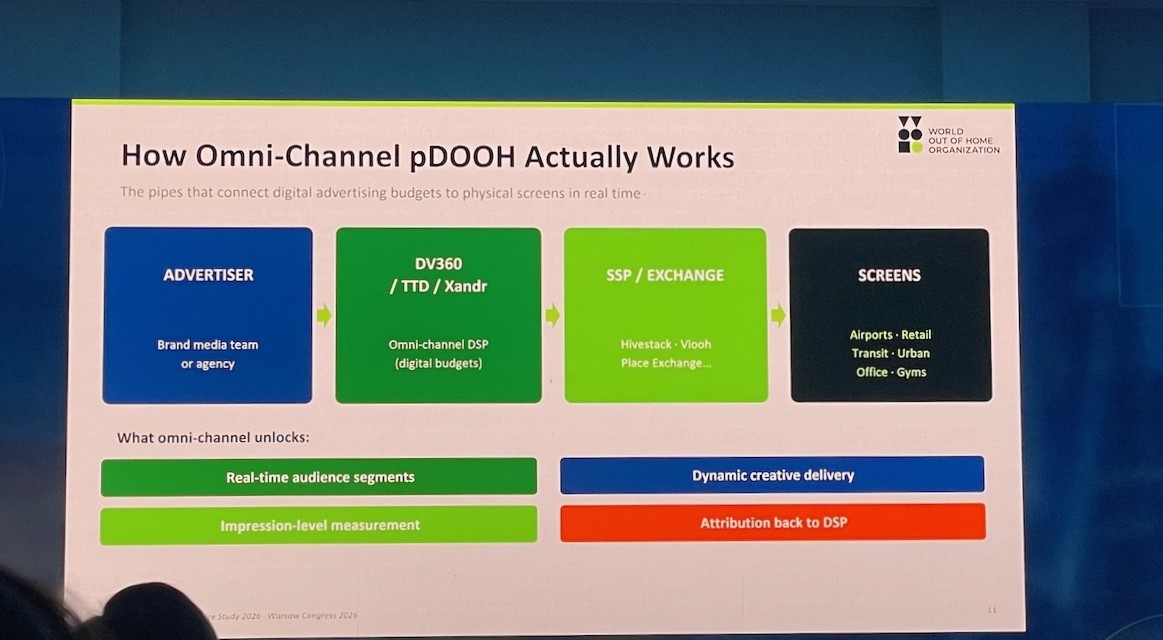
At the heart of the presentation was the ability to integrate DOOH into omnichannel buying. An advertiser or agency using a DSP platform that handles multiple channels can also use it to buy ad slots on screens in cities, on public transport, in shopping centers, or at airports. On the supply side, access to these screens is provided by SSP platforms.
For the buyer, this means the ability to include out-of-home advertising in the environment where they already plan and run their digital activities. OOH can take advantage of audience segments, dynamically delivered creative, and campaign performance data.
According to data presented by Parkes, 65.5 percent of pDOOH spending went through DSPs specializing in out-of-home advertising. The remaining 34.5 percent went through omnichannel platforms. It was precisely this second part of the market where the speaker saw a significant source of further growth.
Consumer electronics provided an example: as much as 72 percent of this category's pDOOH spending was handled through omnichannel DSPs. This shows that advertisers are already able to integrate OOH into their digital buying models. Parkes also pointed to the potential in retail and finance, whose advertisers use similar tools.
Automation still needs relationships
The presentation also included an important signal for operators concerned that programmatic means losing control over sales. As much as 75.7 percent of the global value of pDOOH transactions came from private marketplaces, meaning private marketplaces with negotiated terms. In the United Kingdom, this share reached 94.6 percent.
This is a picture of a market where negotiation, relationships, and knowledge of the available media still matter. Automation streamlines the buying process, but still leaves room for agreeing on quality, context, and the terms of the display.
The expertise of OOH specialists therefore remains essential. Someone needs to understand how audiences use a given space, when a screen holds the greatest value for an advertiser, and what creative will work in a specific setting.
Parkes also recalled the results of a Talon/Nielsen study, according to which 47 percent of a campaign's effectiveness depends on the creative. Even an efficiently executed buy needs a message that grabs attention and is remembered.
The stakes go beyond current OOH budgets
The strongest argument for the growth of omnichannel pDOOH was the comparison of the scale of two markets. Parkes cited estimates according to which the global OOH market was worth about $50 billion in 2025, while the addressable pool of digital advertising spending exceeded $740 billion.
This more than tenfold difference explains why access to digital budgets is generating so much interest. Even a small shift in spending toward outdoor screens could significantly increase the current scale of pDOOH. However, the mere availability of the technology does not guarantee that the money will flow into this channel. Advertisers still need to see what role OOH can play in their campaigns.
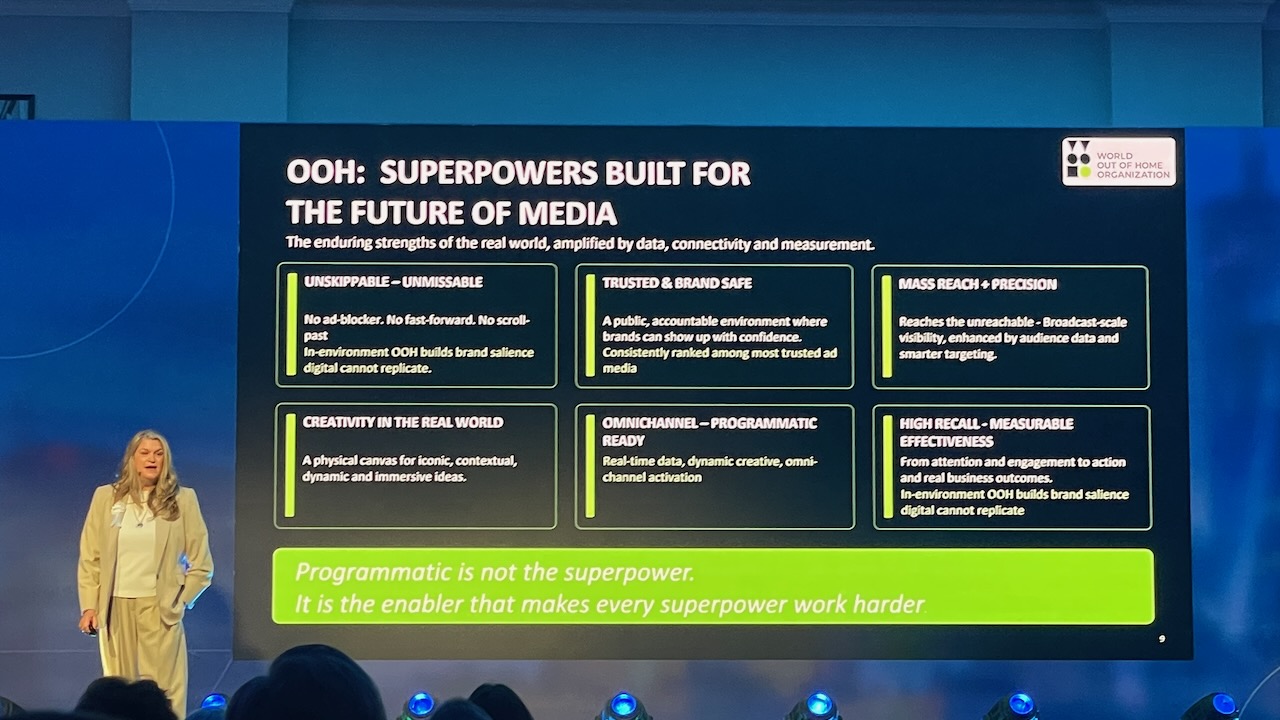
Parkes pointed here to the medium's characteristics: a presence in physical space, mass reach, creative possibilities, and increasingly precise audience targeting. In her view, programmatic makes it possible to make better use of these strengths.
An open window for Central and Eastern Europe
Central and Eastern Europe emerged in the presentation as a region with an opportunity for acceleration. Infrastructure modernization, the growth of digital screens, and a strong presence of advertisers from retail, automotive, and FMCG create favorable conditions for pDOOH growth. The next step is connecting local inventory with the platforms through which international budgets flow.
For Poland, a practical conclusion emerges: it's worth ensuring both the availability of inventory within buying systems and the data needed to assess its value. Combined with the morning discussion on audience measurement, Parkes's presentation formed a coherent whole. Technology opens access to demand, and credible measurement helps convince buyers to invest.
"The future of OOH is omni-channel" – this idea set the direction of the presentation. The industry faces a concrete task: making it easy, and giving good reason, for an advertiser planning a digital campaign to include out-of-home advertising in it.
Programmatic DOOH in numbers – 7 key facts
- $1.339 billion was the global spending on programmatic DOOH in 2025, accounting for 7% of the DOOH market studied.
- 14.1% was the programmatic share of the DOOH market in the US, 9.4% in EMEA, and 1.7% in the APAC region.
- $545.5 million – that was pDOOH spending in the US, the largest market by value. Germany led in programmatic share (31.8%), ahead of Belgium (25.5%) and the United Kingdom (7.1%).
- 65.5% of pDOOH spending was handled through platforms specializing in out-of-home advertising, while 34.5% went through omnichannel DSP platforms.
- 72% of spending on pDOOH in the consumer electronics category went through omnichannel DSPs. This is an example of a category that effectively integrates DOOH into digital media buying models.
- 75.7% of the global value of pDOOH transactions was executed through the Private Marketplace (PMP) model. In the United Kingdom, this share reached as much as 94.6%.
- $740 billion vs. $50 billion – this was the estimated global value of the addressable digital advertising pool, compared to the value of the OOH market in 2025. This shows the potential that access to digital budgets creates for out-of-home advertising.
Source: WOO pDOOH Expenditure Study 2026, 2025 data, presentation by Sarah Parkes at the WOO Central European Regional Forum in Warsaw (October 23, 2026).