Trust first, then growth. Gideon Adey on the measurement opening OOH's path to bigger budgets
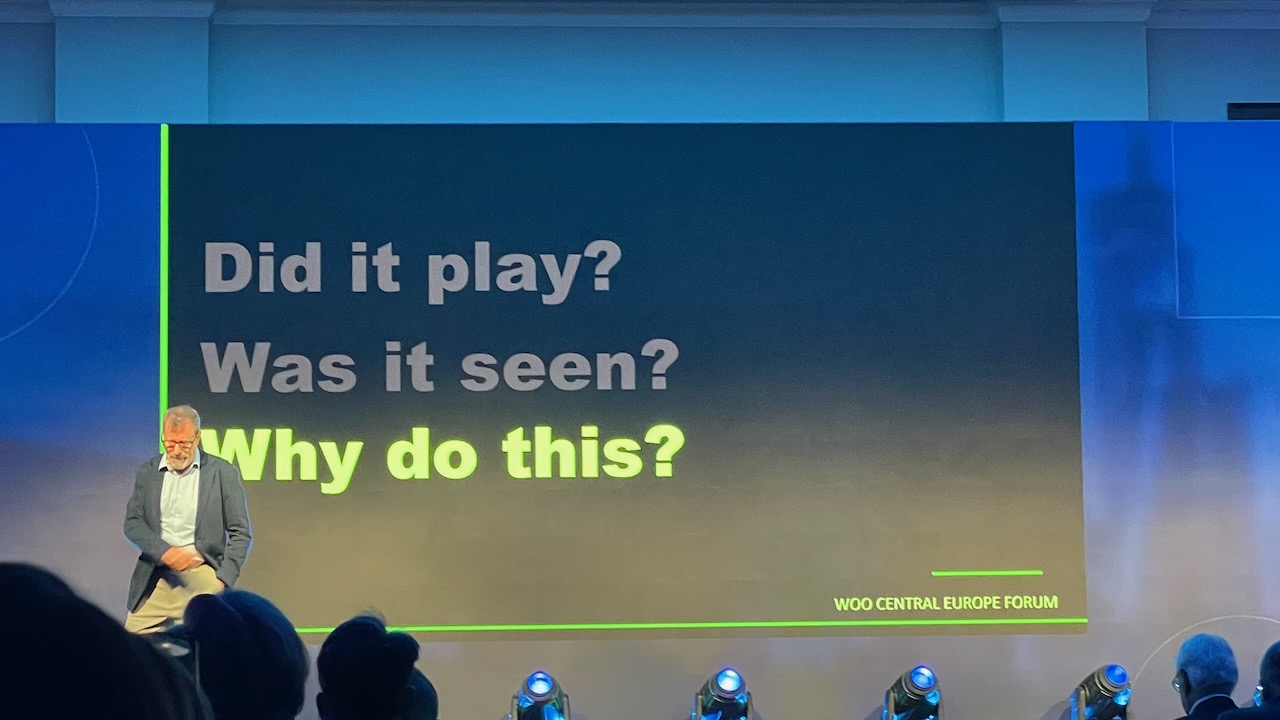
"Did it play? Was it seen? Why do this?" With these three short questions, Gideon Adey, CEO of Gurooh Ltd, opened the morning session on audience measurement at the WOO Central European Regional Forum in Warsaw on October 23, 2026.
Questions about whether an ad was actually played, whether it was seen, and why these efforts are even undertaken set the direction for the conversation on out-of-home advertising accountability. The message of the presentation was clear: if OOH wants to capture a larger share of advertising budgets, it must provide credible evidence of its value.
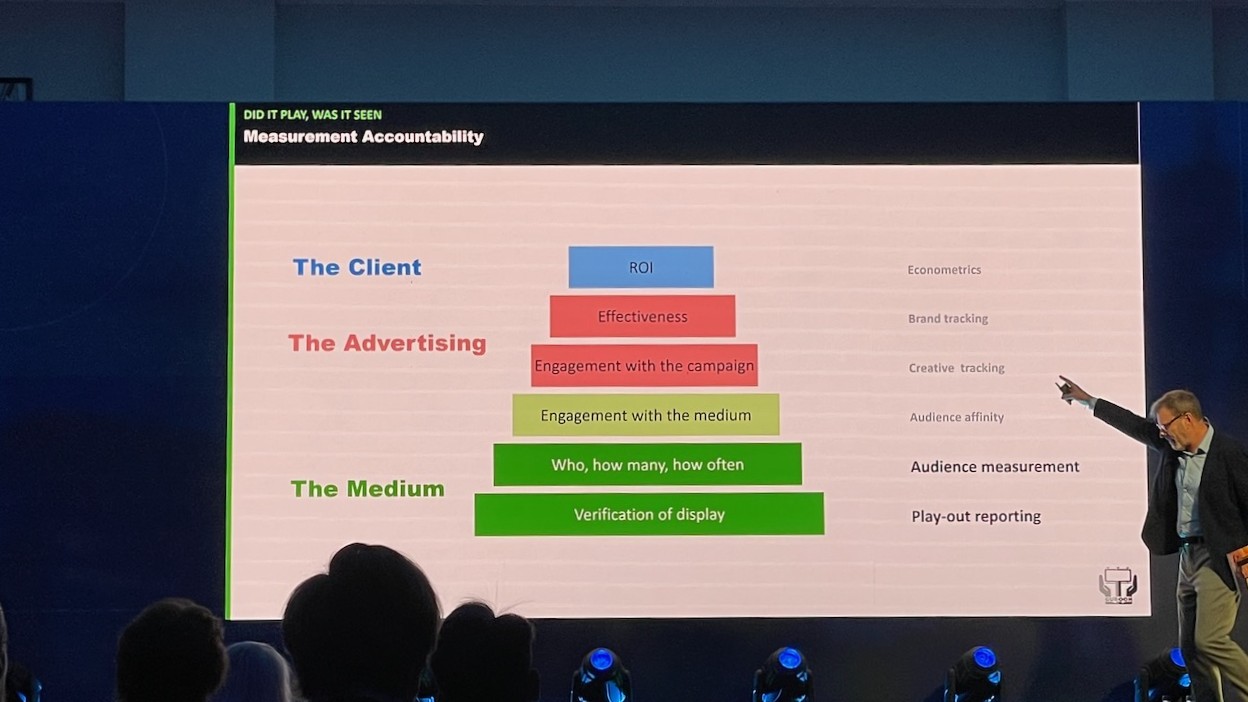
Adey presented measurement as a pyramid. At its base he placed two areas for which digital out-of-home operators are responsible: play verification and audience measurement. First, you need to know whether the ad actually appeared on screen. Then you need to establish who it reached, how many people had contact with it, and how often.
Only on these foundations can the next levels be built: audience fit, referred to as audience affinity, creative testing, and brand effect tracking. At the top sits the client's perspective - return on investment, assessed using econometrics. This structure organizes accountability, but it also reveals a dependency: it is hard to speak convincingly about campaign effectiveness without certainty about its play-out and audience.
The entry ticket to the game
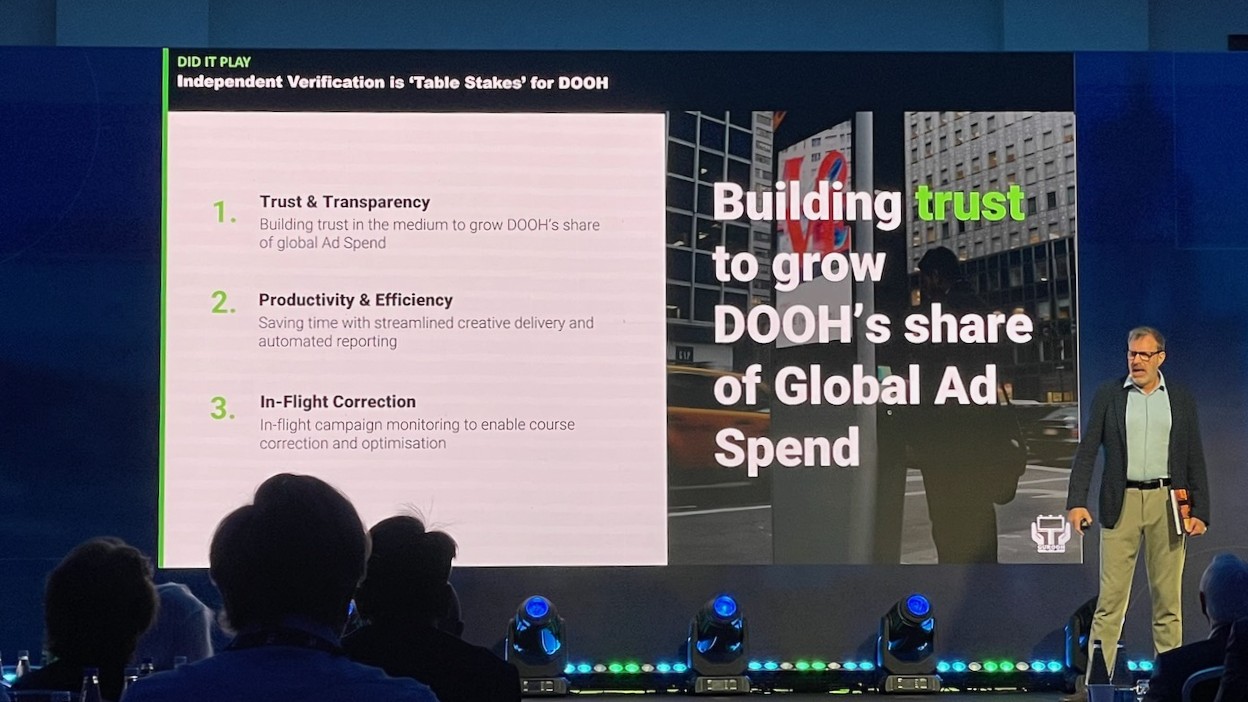
Adey compared independent play verification to the poker concept of "table stakes": the minimum required just to sit down at the table. For DOOH, this means confirming that the purchased ad was displayed as agreed. In his view, however, the benefits extend beyond simply checking that an order was fulfilled.
Verification builds trust and transparency, streamlines creative delivery, and automates reporting. It also allows issues to be addressed while a campaign is still running, when a detected problem can be fixed and execution improved.
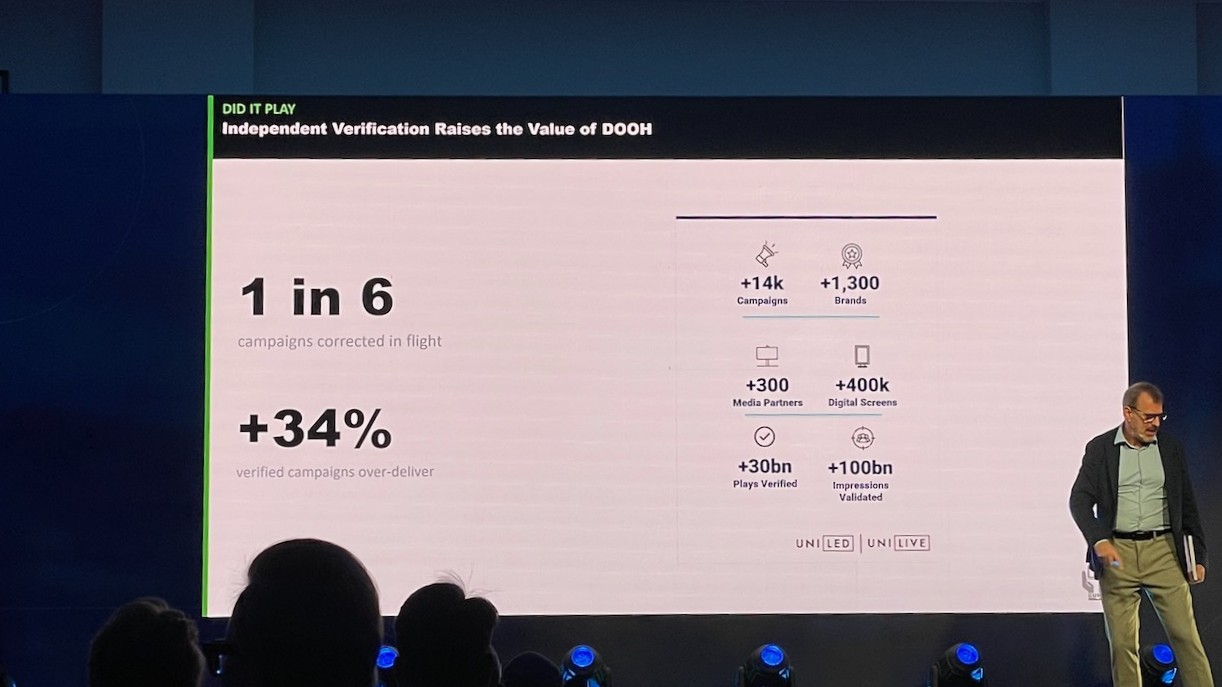
Adey also pointed out that verification can demonstrate that more value was delivered than originally promised. It therefore helps both to detect shortfalls and to document additional impact provided by the medium.
The medium is accelerating, measurement must keep up
"The Medium Evolves. Our Measurement Must Keep Up!" - the slogan on one of the slides captured the central theme of the presentation well. Digitalization is transforming out-of-home advertising, and with it, the demands on data describing its audience are growing.
Adey highlighted the growth of data-driven media planning and buying, automation, and the mounting pressure to demonstrate return on investment. OOH must provide information that can be used in marketing modeling and econometric analysis. Both the accuracy and the timeliness of data matter here, as does the ability to verify it.
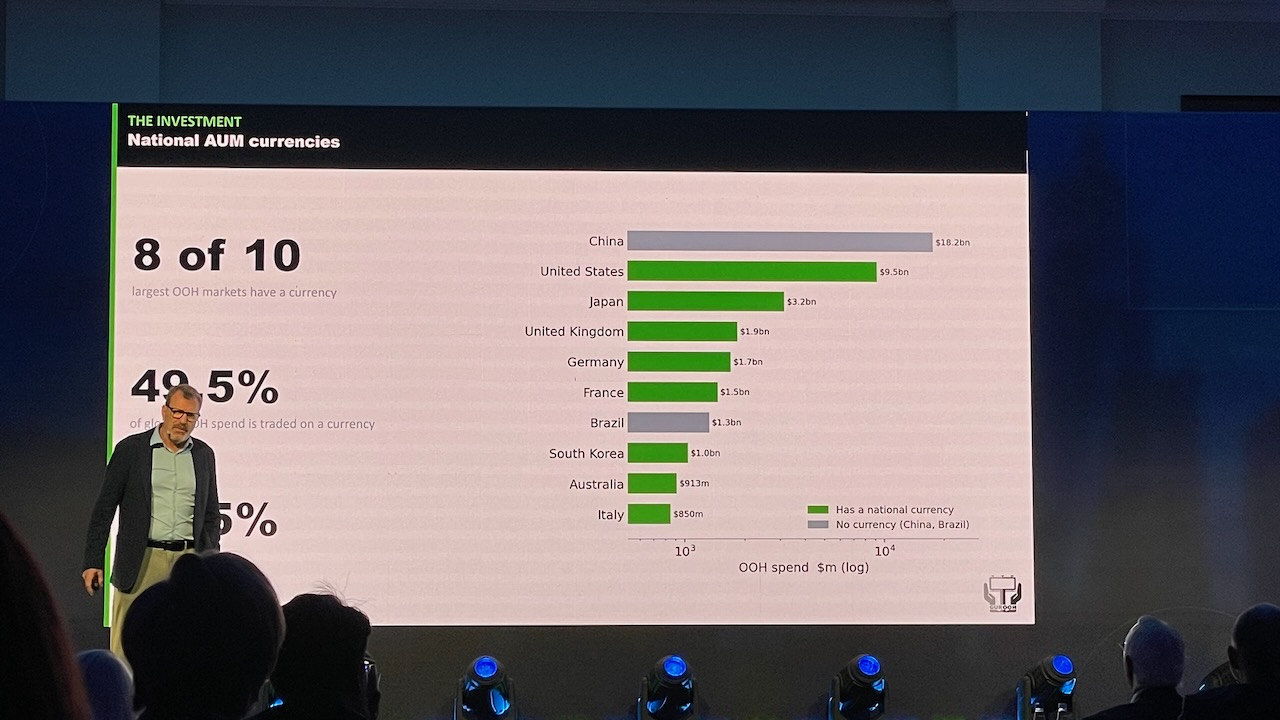
Data on national measurement currencies - the agreed standards on which the market bases its planning and audience billing - stood out particularly strongly. According to figures presented by Adey, eight of the ten largest OOH markets have their own measurement currency. China and Brazil are the exceptions. In total, 49.5 percent of global out-of-home ad spend goes toward purchases billed on the basis of such a currency.
An even clearer pattern emerged around programmatic buying.
pDOOH accounts for roughly seven percent of global DOOH, yet as much as 90 percent of that volume is concentrated in markets with a measurement currency. Among pDOOH markets large enough for PwC to list separately in its study for WOO, only two lack a national currency.
These proportions alone don't prove that establishing a standard automatically drives growth. They do show, however, where programmatic buying is concentrated today and how often it goes hand in hand with a shared measurement foundation.
A shared approach instead of a single formula
The response to the industry's changing needs is also meant to come from the Global OOH Audience Measurement Guidelines 2.0, published by WOO in June 2026. The document presented by Adey runs to 160 pages, incorporates input from 19 measurement organizations - including Route, Geopath, COMMB, Outdoor Impact, MEX and SPR+ - and features 22 case studies from different countries.
What emerges from the presented framework is a model of measurement in which DOOH becomes the default point of reference. Telecom data, SDK-derived data, and external sources are all growing in importance. The guidelines also address the growth of synthetic data and post-campaign measurement. It is essential that the results can be used in marketing modeling and cross-media analysis.
Adey emphasized that there is no single universal answer that works for every market. What does exist is a sound approach that can be applied regardless of local conditions.
Its foundation is trust built on four pillars: oversight and multi-stakeholder co-ownership, faithful representation of reality, advanced technology-driven methodology, and accountability and transparency. From this perspective, how measurement is governed becomes just as important as the data sources themselves. The result must be credible even to market participants who had no part in producing it.
The Polish perspective
For the Polish market, Adey's presentation made the case for treating measurement as infrastructure essential to further growth. The concentration of programmatic DOOH in markets that have a currency shows the importance of a common language that operators, agencies, and advertisers can all use.
This matters especially when competing for international omnichannel budgets. Credible audience data, independent verification of ad plays, and transparent oversight rules make it easier to assess an offer and incorporate it into a broader media plan.
The three questions from the start of the session thus fall into a practical sequence. Play verification establishes what was delivered. Audience measurement shows who the ad reached. Only then does the conversation about a campaign's business value gain solid footing. It is from this foundation, Adey argued in Warsaw, that OOH's path to bigger budgets begins.
Summary:
- 8 of the 10 largest OOH markets have their own audience measurement currency.
- 49.5% of global OOH spend goes toward purchases billed on a national measurement currency.
- Around 7% of the global DOOH market is made up of programmatic DOOH (pDOOH).
- 4 pillars of credible OOH measurement: multi-stakeholder oversight and co-ownership, faithful representation of reality, advanced technology-driven methodology, and accountability and transparency.
- 3 questions proposed by Gideon Adey help assess the value of OOH advertising: was the ad played, did audiences see it, and what goal was the campaign meant to achieve?